
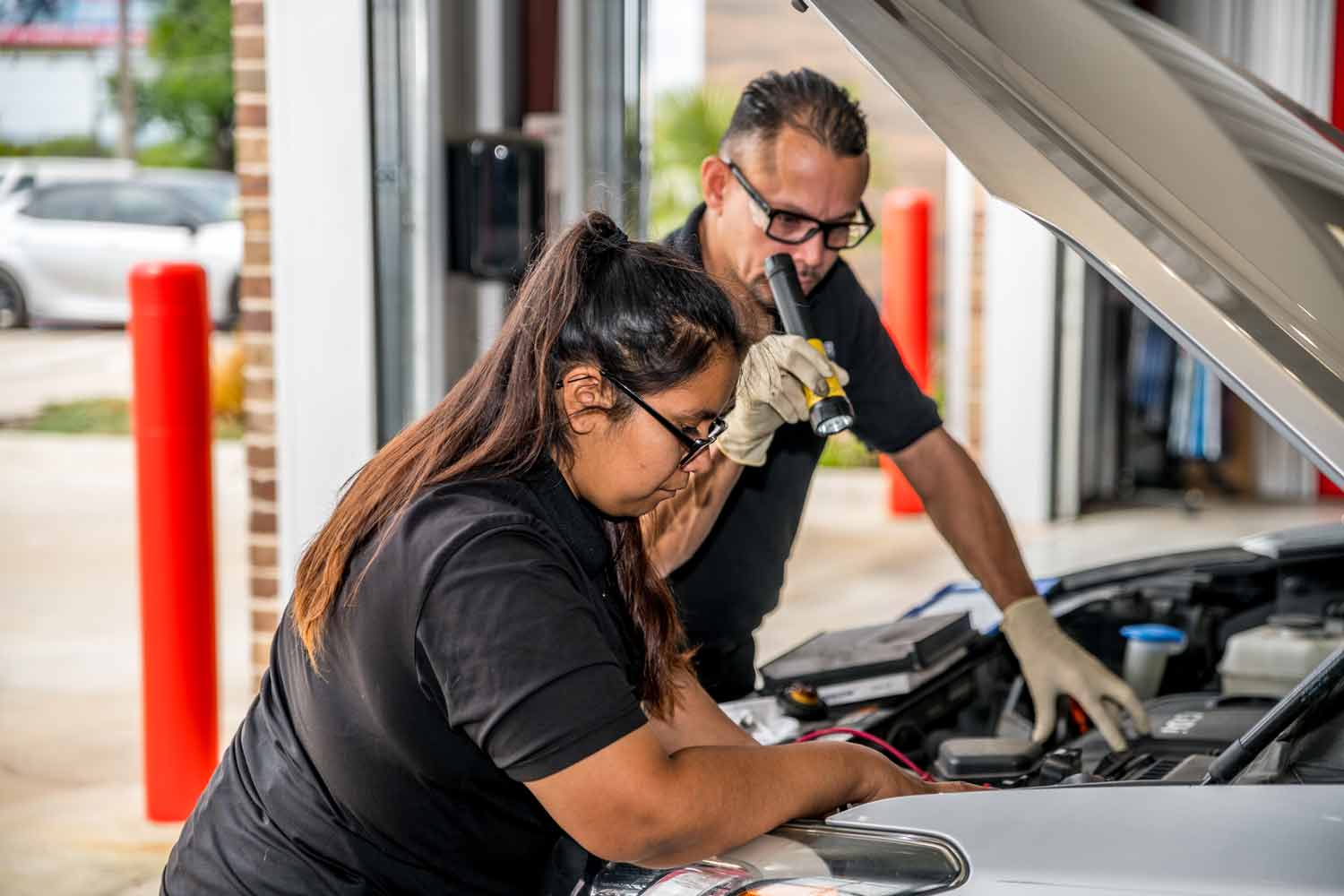
When you hand your vehicle over to an auto repair shop, you’re trusting them not only with labor and skill, but also with the integrity of the parts they install. A repair job can only last as long as the components used. That’s why knowing how to check if your auto repair shop uses quality parts is essential to protecting your investment and ensuring safety on the road.
Below is a comprehensive guide—rooted in real-world practices and industry standards—to help you assess whether your repair shop is using high-grade, dependable parts.
Why “Quality Parts” Really Matter
Parts are not just interchangeable generic pieces. The durability, performance, and compatibility of a part influence how your vehicle behaves, from drivability to longevity. Using substandard or counterfeit parts can lead to:
- Premature failure and repeated repairs
- Warranty voids or disputes
- Compromised safety (especially for brakes, steering, suspension)
- Increased overall ownership cost
Since parts don’t wear out overnight, many issues go unnoticed until failure. That’s why vetting the repair shop’s sourcing and part validation practices is crucial.
What Sets Quality Parts Apart?
Before you inspect claims, understand the characteristics that distinguish quality components from cheap substitutes.
Material and Manufacturing Standards
- OEM (Original Equipment Manufacturer) parts are built to the exact factory specifications.
- Aftermarket premium parts can be equally good or occasionally better, if made by reputable third-party manufacturers.
- Low-grade aftermarket parts often use inferior metals, cheaper molds, or reduced tolerances.
Traceability and Certification
- Serial numbers, lot codes, or stamps showing compliance with standards (ISO, SAE, etc.)
- Certificates of conformance or manufacturer paperwork
Warranty and Guarantee
- Reputable parts often carry warranties (12 months, 24 months, or more)
- A shop willing to back the part with warranty is a strong signal
Fit, Finish, and Consistency
- Consistency across parts (same batches, same finishes)
- Precise fit without modifications required
Steps to Verify That Your Shop Uses Quality Parts
This is the step-by-step approach you can follow, whether you’re doing a repair yourself or overseeing work done by a shop.
Step 1: Ask Direct Questions Upfront
Begin any repair discussion by asking:
- “Are parts new, OEM, or aftermarket?”
- “Can you show me the packaging or documentation of parts used?”
- “What warranty do you offer on parts and workmanship?”
A shop confident in its sourcing will respond transparently.
Step 2: Inspect the Parts Before Installation
Once the repair work begins, ask to physically see the parts. Evaluate:
- Packaging: Official brand packaging, tamper-evident seals, holograms, clear labeling
- Markings: Part number, material markings, manufacturer logo
- Weight and feel: Heft and density often reveal difference
- Surface finish: A clean, consistent finish rather than rough edges
If the shop resists revealing parts or claims confidentiality, that’s a red flag.
Step 3: Cross-Check Part Numbers and Brands
You don’t need to be an expert—just take note of the part number and brand. Later you can:
- Search in industry catalogs or manufacturer websites
- Confirm compatibility and reputation
- Ask for comparisons from independent mechanics
If a shop mislabels or intentionally hides part sources, there’s cause for concern.
Step 4: Request a Written Bill of Part Details
A detailed invoice should list:
- Part name and part number
- Manufacturer/brand name
- Quantity used
- Price per part
- Warranty terms
A vague “parts and materials” line is not acceptable.
Step 5: Watch for Substitutions
After a repair begins, confirm that no last-minute substitutions are made without your knowledge. A trustworthy shop will:
- Inform you of substitutions
- Show you the replacement part
- Explain the reason (e.g. original out-of-stock, equivalent alternative)
Any unapproved swap weakens trust.
Step 6: Look for Used or Rebuilt Parts Disclosures
In some repairs (e.g., a transmission rebuild), shops might propose used, rebuilt, or remanufactured parts. If they do, they should:
- Disclose explicitly
- Clarify condition, remaining life, or refurbishment process
- Offer you the option of a new alternative
Make sure you consent. Never assume “remanufactured” means “same strength as new” unless backed by warranty.
Step 7: Evaluate Warranty and Return Policy
Quality parts are often backed by:
- Manufacturer warranty (e.g. 12 months, 36,000 miles)
- Shop’s warranty on installation
Ask what happens if a part fails prematurely:
- Will the shop replace it free?
- What circumstances void the warranty?
- Do you have to bring the vehicle back there?
If warranty terms are vague or non-assertive, suspect lower-grade parts.
Step 8: Research the Supplier Network
A reputable shop tends to work with trusted distributors. You can:
- Ask for the name of their supplier or parts distributor
- Look up that supplier’s reputation online
- Determine whether the shop sources parts locally or from questionable overseas vendors
Shops aligned with known distributors are more likely to source quality parts.
Step 9: Use Independent Expert Inspection (When Applicable)
For large or complex repairs (engine rebuild, transmission overhaul), it may make sense to:
- Engage a third-party inspection
- Ask for teardown reports
- Validate the materials and finishing
This is rare for everyday repairs, but useful in high-stakes scenarios.
Warning Signs That a Shop May Use Inferior Parts
Recognizing red flags helps you avoid costly mistakes. Be wary if:
- The shop is reluctant to show you parts or documentation
- Packaging is torn, unlabeled, or generic
- Components differ visibly in color, branding, or finish
- The shop quotes a much lower price “just this once”
- Warranty or return terms are vague or verbally promises only
- You notice repeated failures on similar repairs
These often indicate corners being cut.
Examples in Real Life: Applying These Checks
Example 1: Brake Pad Replacement
- Before installation, the technician shows you the sealed brake pad box with a hologram.
- You note the part number and brand (e.g. Bosch, Brembo) and later verify them online.
- You receive a written bill with warranty for 24 months.
- Later, you verify no substitutions were made.
That’s a shop using quality parts reliably.
Example 2: Engine Gasket Job
- The shop says it will use a remanufactured gasket set.
- They display the box, naming manufacturer and condition.
- Because you want new, you request a new OEM set instead, and shop accommodates.
- The invoice clearly indicates which items were OEM vs reman.
You maintain control and clarity.
Frequently Asked Questions (FAQ)
What if I don’t understand parts lingo or markings?
You can always ask the shop to explain the part number, batch code, or certification. A legitimate shop will provide clarity without condescension.
Can I bring my own parts to the shop?
Yes, many repair shops allow “you supply the parts” arrangements. But be cautious: the shop may refuse warranty if problems arise due to part quality or compatibility.
Are used or refurbished parts always bad?
No—they can be perfectly acceptable if remanufactured by reputable sources and backed by warranty. The key is full disclosure, traceability, and shop willingness to back them.
How do I check if parts installed are truly quality after the repair?
Save your invoices and part numbers. If a failure occurs, you can:
- Open the component for inspection
- Cross-reference part numbers
- Consult an independent mechanic for material or finish evaluation
Is insisting on OEM parts always necessary?
Not always. High-end aftermarket parts from known brands often perform as well or better in some cases. The critical point is transparency, traceability, and warranty, not always sticking rigidly to OEM.
What warranties should I expect for quality parts?
Typically, 12 to 36 months or mileage-based coverage is standard for many components. For critical systems (brakes, transmission, engine internals), longer warranties are common. If a shop offers no written warranty, you should be very cautious.